Iván Waisman
Anxiety Therapist in Barcelona, in English
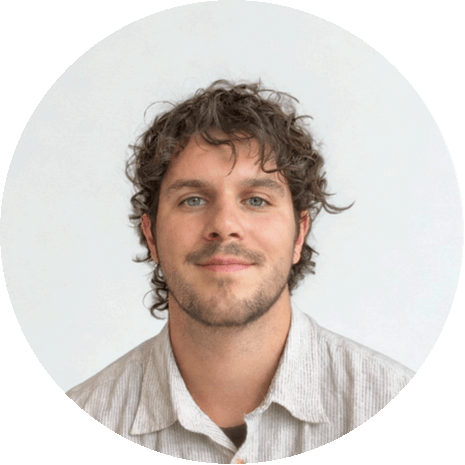
Hi! I'm Iván. I'm a registered psychologist (COP-CAT 36779), and anxiety is one of the areas I work with most often.
I work online with people in Barcelona who are looking for an English-speaking therapist, in English or Spanish.
On this page I'll walk you through how I understand anxiety, how we usually work on it and my fees. Feel free to book a first short meeting at no cost. My priority is to help you!
What anxiety is
Anxiety is one of those words we all use, and it means something different for each of us. In Behaviour Analysis we call it an "umbrella-term": it covers very diverse human experiences, from worrying about what might happen to feeling your body on alert in a meeting, a date or a test, and each of them needs to be understood carefully to see which psychological processes are really going on for you, and in which moments.
This really does matter, since anxiety is not the enemy in itself. Evolutionarily, it has a healthy function, preparing us to look after something important or ask for help, for instance.
Anxiety can become a problem when it functions in a way that brings up more problems than solutions. When we cannot stop thinking and hence have no rest or peace or connection. When it fosters avoidance and we stop living. Or when it gets in the middle of our lives and we begin acting in ways that cause us trouble.
Part of our work is understanding what your anxiety is doing in each situation, which in Behaviour Analysis we call its function and context.
How anxiety shows up
That differs from person to person. These are some of the forms I see most often:
Worrying endlessly about the future or the past, or existential anxiety (those bigger questions about life) usually happen when we're alone at home, especially in the evening. We psychologists usually call this "abstract rumination".
Social anxiety, often together with self-esteem issues or environmental stressors, in situations of social interaction or social goals, such as fitness training, new romantic experiences or professional or academic situations.
Sometimes anxiety leads to emotional dysregulation: emotions feel bigger than the moment, and we end up overwhelmed, snapping at someone or shutting down.
Steering our lives around the things that make us anxious, which understandably brings relief for a while but then makes our world a little smaller each time.
Anxiety and self-esteem very often come together, and when they do, we work on them together. If that's closer to what's going on for you, I also have a page on self-esteem and perfectionism.
How we work on anxiety
When dealing with anxiety, we are usually within what we call the "control agenda", which stems from cognitive fusion: the idea that to feel good we need to escape from or follow our painful thoughts and feelings to the letter. The issue here is that this, paradoxically, usually leads to the pain growing, and taking over all our attention. This way, our life becomes a struggle to get away from pain, instead of actually using our limited time to build a sweeter, richer life.
ACT sets forward a different way to approach our anxiety: to learn to listen to our difficult experiences and take in its teachings, whilst not getting caught in them. This is not just a mandate: ACT has developed many ways and techniques to build these skills.
That's why one of the first things we do is uncover what matters to you in the situations where anxiety shows up. Anxiety, sadness or even anger usually work like a map, pointing towards what is really important to us. Once we know that, we have a direction to work towards, and that clarity about what truly matters becomes the compass for taking real steps in that direction.
In order to work on your anxiety, we need to look at how you're actually relating to what you feel and think. We'll pay special attention to what cutting-edge research in Psychology calls transdiagnostic processes to get more precision on what you're going through.
We decide together, then, on where it's best to start, and we work on the function of your anxiety in each context, so you can channel it in helpful ways (such as getting ready for something important) and turn away from it, or make it less intense, when you're trying to rest or enjoy time with others.
Depending on what you need, we might practice exposure, mindfulness or self-soothing skills, drawing on ACT, a contemporary form of CBT, and DBT, which I'm also trained in.
Anxiety when you live abroad
Living abroad can keep us on alert for a long time: settling in, demanding jobs, a new language and being far from our people all add up. If living abroad is a big part of the picture, I want you to know I'm experienced in working with expats both in English and in Spanish, and I also have a specific page on therapy for expats in Barcelona.
Fees and the first call
I want to make sure that income or time are not an obstacle for you to continue your process. That's why I try to adapt both my fees and schedule to match your needs (more on that on my intake form). As for frequency, most studies on psychotherapy are on a weekly basis, so that's the suggested starting point; but it's not an obligation: you can come at your own rhythm.
For the time being, sessions with people in Barcelona are online only, in English or Spanish, by video call. You'll need a device with a camera and microphone, a pair of earphones and a comfortable spot private enough to be honest and allow yourself to be vulnerable. Here's more on how online therapy in English works with me.
I gladly offer a first short meeting at no cost to see if we get along and to answer any questions you might have regarding my approach or your specific situation.
As for my training, I'm a registered psychologist (COP-CAT 36779), with a Licentiate Degree in Psychology from Argentina, an International Diploma in Contextual Behavioural Psychotherapies (ACT, DBT and FAP) and a Master's Degree in General Health Psychology (Spain, by homologation).
Questions people ask
Will therapy help with my anxiety?
Psychotherapy for emotional difficulties, anxiety among them, has extensive research behind it, and our work builds on that research while being adapted, session by session, to each person and their life. In every session we go through assessment, deciding where to focus, intervention and feedback, following a flexible structure adapted to your specific needs.
How long does therapy for anxiety take?
There's no fixed number of sessions, since it depends on what's going on for you and what you want from therapy. Rather than chasing fast results, we focus on actually moving forward. Still, we care about results, so about once a month I'll ask for your feedback so we can see together whether we need to change course or add something.
Do I need medication for anxiety?
I'm a psychologist, so I don't prescribe medication. If medication is something you'd like to consider, a psychiatrist or your GP is the right person to talk to, and if you're already taking it, please don't change or stop it without talking to whoever prescribed it. Medication usually has a beneficial effect on anxiety issues as long as it is prescribed and tailored to each situation, and it's usually best when it's combined with psychological guidance as well.
You might also want to read about self-esteem and perfectionism.